ChatGPT Translate: OpenAI’s New Competitor to Google Translate
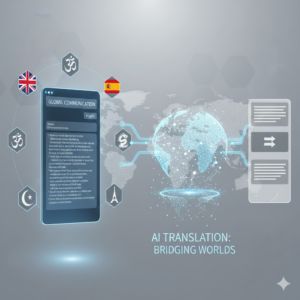
Language translation tools have become essential in today’s interconnected world. Recently, OpenAI expanded its suite of AI products with the launch of ChatGPT Translate (available at chatgpt.com/translate), a dedicated web-based translation service. Designed to compete directly with established solutions like Google Translate, ChatGPT Translate offers AI-driven translations across more than 50 languages.
In this blog, we explore what ChatGPT Translate is, how it works, how it compares with Google Translate, and why this matters for both everyday users and businesses.
What Is ChatGPT Translate?
ChatGPT Translate is a web-based translation tool built by OpenAI. Unlike the main ChatGPT interface, which is a multipurpose chatbot, this platform focuses specifically on language translation. Users simply visit the URL (chatgpt.com/translate) and enter text or upload content to translate between supported languages.
The tool uses OpenAI’s advanced AI language models to deliver translations that aim to be more natural and contextually accurate than traditional statistical-based translation engines.
How ChatGPT Translate Works
At its core, ChatGPT Translate leverages deep learning and neural language models to understand and generate translations based on context, tone, and meaning—not just word-to-word substitution.
Key aspects include:
1. Context-Aware Translation
AI models assess not just individual words but the broader meaning of sentences. This helps produce translations that preserve nuance and style.
2. Support for 50+ Languages
ChatGPT Translate supports translation between more than 50 languages, covering major global languages and several regional ones.
3. Natural, Conversational Output
Translations aim to read like native content, improving clarity for readers and users.
ChatGPT Translate vs Google Translate
Google Translate has long been the default translation choice for millions of users worldwide. So how does ChatGPT Translate stack up?
Quality and Context
While Google Translate uses established neural machine translation technologies, ChatGPT Translate leverages conversational AI that can handle context more deeply, especially for longer text or conversational sentences.
User Experience
ChatGPT Translate’s interface focuses solely on translations, making it simple and intuitive. Some users report that the AI’s output feels more natural and human-like.
Use Cases
Google Translate remains strong for quick phrase translations, mobile use, and scanning text with a camera. ChatGPT Translate is particularly effective for:
– Long-form content translation
– Business documents
– Creative or marketing content
– Tone-sensitive text (e.g., emails or social media posts)
Why ChatGPT Translate Matters
The introduction of ChatGPT Translate is significant for several reasons:
Improved Translation Quality
By using advanced AI language models, OpenAI can offer translations that preserve tone, intent, and nuance—especially helpful for professional or creative content.
Expanded Accessibility
With support for more than 50 languages, the tool can serve a global audience, aiding communication across cultures and markets.
Business and Marketing Use
For digital marketers, content creators, and global businesses, accurate translation is critical. ChatGPT Translate provides a new solution for:
– Localizing websites
– Translating ads and campaigns
– Crafting region-appropriate content
– Serving multilingual customers
Real-World Use Cases
ChatGPT Translate can be applied in various scenarios:
– E-commerce localization: Translate product descriptions, reviews, and support content to reach international audiences.
– Content marketing: Convert blogs, email newsletters, and social posts into multiple languages with better contextual accuracy.
– Customer support: Offer multilingual responses that feel natural and professional.
– Education: Translate learning materials while preserving instructional tone and clarity.
Conclusion
OpenAI’s ChatGPT Translate is more than another translation tool. It represents a shift toward AI-powered, context-aware translation that prioritizes natural language and user intent. While tools like Google Translate remain valuable and widely used, ChatGPT Translate offers a compelling alternative—especially for users and businesses seeking higher-quality, nuanced translations.
For digital marketers and global brands, this opens up new opportunities to communicate clearly and effectively across languages, improving user experience and expanding reach.
Recent Posts
Check Our Digital Marketing Services
- Amazon Advertising & Amazon Listing
- Contact Us
- Content Marketing
- Email Marketing
- Facebook Advertising
- Flipkart Advertising & Flipkart Listing
- Get Quote
- Google Advertising
- Google My Business (GMB) Management
- Portfolio
- PPC(Pay-per-click) Advertising
- Privacy Policy
- SEO services in varanasi
- Services
- SMM
- SMO
- Storybook
- Storybook Form
- Storybook Template
- Testimonials
- Video testing
- Website Development
- WhatsApp Marketing
- Work